


Horde War: Summon of Avengers
4.424.00 Reviews
App Specs
- Version
- 1.0.10
- Updated On
- License
- Free
- Downloads
- 50,000+
- Developer
- JoyTogether Games
- Categories
- Card
- Platform
- Android
Screenshots
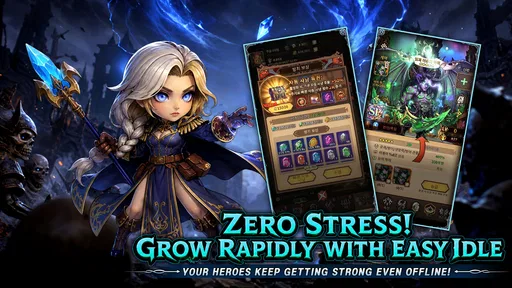
 Analysis by AppCompare
I went into Horde War: Summon of Avengers expecting a quick card game built around collecting heroes, but I found a more focused experience: the appeal comes from deciding which summoned characters deserve a place in my tribe and how to turn a scattered group into a fighting force. It is free to start, belongs to the card-game category, and is made by JoyTogether Games. My overall view is positive, but with an important condition: this is better suited to players who enjoy gradual roster building and repeated tactical decisions than to anyone looking for a deep, traditional card battler from the first session.
The central idea is easy to understand. Heroes are not presented as a ready-made team; the player gathers them and then leads the tribe into conflict. That gives the game a useful sense of direction. I am not simply playing isolated hands or collecting cards for their own sake. Every addition to the roster feels connected to a broader question: does this character improve the group I am already building, or am I chasing a tempting individual without a clear plan?
How the tribal hero idea shapes the experience
The strongest part of the game is the way its theme gives ordinary card-collection decisions a little more meaning. In many mobile card games, a new card is exciting for a moment and then becomes another item in a crowded inventory. Here, the language of summoning heroes and leading a tribe encourages me to think in terms of a growing force. Even when the underlying activity is familiar, the framing makes progression feel more personal.
I also like that the concept leaves room for different kinds of players. Someone may enjoy discovering heroes and improving the overall collection, while another player may care more about building a practical fighting group. Those are not exactly the same goal. A large roster can be satisfying, but it does not automatically mean the roster is coherent. The more useful habit is to ask what each new hero contributes to the team I am trying to develop.
That is my first practical recommendation: resist the urge to treat every summon as an immediate upgrade. When a new character appears, I would compare it with the role already covered by the tribe, then consider whether it helps the group as a whole. This approach is more rewarding than simply favoring the newest addition, especially for players who want their decisions to matter beyond the current encounter.
The game’s card format also makes it approachable. I do not need the same commitment required by a large strategy title with a long rulebook or a complicated competitive ecosystem. The basic fantasy is clear enough to understand quickly, while the collection angle gives me a reason to return. That balance is one of the reasons I can imagine recommending it to a friend who wants a light mobile game with more direction than a purely casual time-killer.
What works during ordinary play
Horde War is at its most comfortable when I treat it as a short routine rather than an all-day project. A realistic use case would be opening it during a commute, while waiting for an appointment, or after finishing a few household tasks. I can check the state of my tribe, think about which heroes deserve attention, and move toward the next battle without needing to reserve an entire evening.
Worth Reading Before You Choose

EA SPORTS FC Mobile 26 Is a Bigger Football Game, but It Takes Time

Flipboard Shows What News Apps Must Do Beyond the Feed

Switching to Android Auto Means Rethinking Your Driving Routine

Google Calendar Makes a Crowded Week Easier to Manage

Ludo King Makes the Most of the Minutes Between Plans

Baby Panda World Brings Quick Play to Modern Phones, but Its Game Library Feels Busy
That short-session quality is especially useful for players who like collecting but do not want a game that demands constant concentration. The tribe theme provides a clear reason to check in, and the card structure makes the action feel organized. I can focus on one decision at a time: summon, assess, adjust, and prepare for the next fight. It is a simple loop, but it is easier to return to than a game that throws several unrelated systems at me immediately.
There is also a satisfying difference between a hero who looks appealing on paper and one who fits the group I am actually using. That distinction creates the most interesting form of decision-making in the game. I am not only asking whether a card is strong; I am asking whether it belongs in this particular tribe. For a collection game, that is a healthier way to think because it prevents the roster from becoming a meaningless pile of names.
My second practical tip is to keep a small mental record of the tribe’s current identity. Is it built around dependable progress, aggressive battles, or simply the heroes I enjoy using most? Without that anchor, summoning can become reactive. With it, even a modest addition can be judged more clearly. This is not a complicated optimization system; it is a player-made method for making the collection feel intentional.
The game is also easy to place on a phone or tablet because its premise does not require a large screen to understand. The important information is the hero collection and the decisions around it, not a sprawling world that needs constant visual attention. That makes it a natural fit for mobile play, although players who prefer rich exploration or a story-heavy adventure may find the card format too narrow.
Where the experience loses some force
The same simplicity that makes the game approachable can become its main weakness. If I want a card game with elaborate deck construction, highly technical matchups, or a strong competitive identity, this is not the first title I would choose. Its appeal is tied to summoning heroes and developing a tribe, so players who need every match to feel radically different may eventually want more variety than this format offers.
Another limitation is the risk of collection fatigue. The first new hero can feel meaningful because the roster is still taking shape. Later additions may feel less important if they do not change how I approach the tribe. That is why I would avoid playing on autopilot. If I simply collect without reviewing the group’s direction, the game can start to feel like maintenance rather than strategy.
The free entry point is welcome, but the presence of in-app purchases ranging from $0.99 to $99.99 per item means I would approach progression with a budget in mind. I would not buy anything impulsively just because a summon looks attractive. The smarter approach is to play long enough to understand whether the core loop itself is enjoyable. If the act of building the tribe is not satisfying without spending, purchases are unlikely to solve that problem.
This is my third concrete piece of advice: decide before playing whether you are a collector, a planner, or a casual visitor. A collector may be tempted by every opportunity to expand the roster. A planner will probably get more value from waiting and shaping a team. A casual visitor should focus on the battles and stop when the routine begins to feel repetitive. Knowing which style fits you can prevent the game’s purchase options from steering your experience.
I would also keep expectations realistic around the age rating. The game is rated Everyone 10+, which makes it broadly accessible, but that does not mean it will suit every younger player equally. The card and battle framing may appeal to children who enjoy hero collecting, while others may prefer a faster action game or a more direct puzzle. For families, I would judge it by the child’s interest in planning and collecting rather than by the age label alone.
Who should play it and who should look elsewhere
I think Horde War is a good match for someone who wants a free mobile card game with a clear hero-building premise. It works particularly well for players who enjoy watching a roster develop over time and who like making small decisions about team composition. The game does not need to replace a larger strategy title; it can sit alongside one as a lighter option for short sessions.
It is also a reasonable choice for a friend who likes fantasy-style tribal themes but does not want to learn a dense rules system before having fun. The basic objective is understandable: gather heroes, form a tribe, and send that group into battle. That clarity matters on mobile, where a player may open the game with only a few minutes available.
On the other hand, I would skip it if my main reason for playing card games is direct competition with finely tuned decks. I would also look elsewhere if I want a narrative adventure, extensive exploration, or an action-focused combat system. The game’s identity is narrower and more collection-led. That is not a flaw by itself, but it means the right audience matters more than usual.
Players who dislike in-app purchase pressure should be cautious as well. The game is free, but optional spending can reach a substantial per-item amount. I would recommend treating purchases as an extra rather than as part of the basic plan. Start with the free experience, decide whether the tribe-building loop holds your attention, and only then consider whether spending adds genuine enjoyment.
The current version is 1.0.10, and the game runs on Android starting with version 7.0. That makes it relevant to people using older compatible devices, although I would still judge the experience by how comfortably the individual phone handles any game. The practical point is that the entry requirement is not limited to the newest Android hardware, which broadens its usefulness as a casual card title.
Its audience response is encouraging without being the only reason to install it. The game carries a 4.4 average from around 14 thousand ratings and has passed 50 thousand installs. I read those numbers as evidence that the core idea is connecting with a meaningful group of players, not as a guarantee that every card-game fan will enjoy it. The small number of reviews shown alongside that broader rating picture also reminds me to rely on the actual play loop rather than popularity alone.
How it compares with familiar card-game choices
Compared with a traditional collectible card game, this title feels more centered on the hero roster and the tribe as a unit. A conventional alternative may reward elaborate deck theory, precise counters, and competitive mastery. Horde War is more inviting if I want the collection itself to be part of the fantasy. The trade-off is that players seeking deep card-by-card combat analysis may find the experience less demanding.
Compared with a simple solitaire-style card game, it offers a stronger sense of progression and purpose. I am not only clearing a hand or chasing a high score; I am building toward battles with a group of heroes. That makes it more engaging for players who need a persistent goal. The trade-off is that it may require more attention to roster decisions than someone looking for a completely relaxing, consequence-free card session wants.
Compared with a large role-playing game, it is much easier to approach in short bursts. I do not need to commit to a long quest or remember a complex world every time I open it. In exchange, I should not expect the same depth of exploration or character storytelling. The best comparison is not “a smaller RPG,” but rather “a card-focused hero-collection game with a tribal battle theme.”
One useful workflow is to separate collection time from battle time. I would first review the tribe calmly, decide which heroes support the current direction, and only then enter the next fight. Making those choices in the middle of a rushed session can lead to random upgrades and a less satisfying roster. This small separation gives the game more structure without turning it into a spreadsheet exercise.
I would also avoid measuring progress only by how many heroes have been summoned. A smaller, better-understood group can be more enjoyable than a larger collection that I never use thoughtfully. The game’s strongest decisions come from connecting the heroes to a plan, so I would pay attention to which additions actually change my choices. If a summon does not affect how I play, it may be less valuable than it first appears.
My final recommendation
After spending time with it, I see Horde War: Summon of Avengers as a focused and accessible card game whose best quality is its clear sense of purpose. The idea of gathering scattered tribal heroes and turning them into a fighting group gives the collection loop a useful emotional hook. I enjoyed it most when I treated every summon as part of a tribe-building decision rather than as a standalone reward.
It is not the right recommendation for everyone. Players who want tournament-level deck construction, a story-rich adventure, or constant mechanical novelty should choose a different kind of game. The free-to-play structure also deserves careful handling because the available purchases extend from small amounts to very large individual items. I would keep spending optional and let the quality of the free loop determine whether the game earns more of my time.
For the right player, though, the balance is appealing. JoyTogether Games has created a mobile card experience that is easy to understand, comfortable in short sessions, and specific enough to encourage personal roster decisions. Its 10+ content rating and broad Android compatibility make it approachable, while the hero-and-tribe premise gives it more identity than a generic card pastime.
My verdict is a cautious recommendation: try it if you enjoy collecting heroes, shaping a team, and making gradual tactical choices. Give it a fair test without spending, decide what kind of player you are, and watch whether the tribe-building loop continues to feel meaningful. If it does, this free game can become a pleasant everyday companion; if you need deep competitive card theory or a large adventure, it is better regarded as a lighter side game than as your main mobile experience.
Pros
- Large roster of heroes offers plenty of team-building options.
- Auto-battle makes routine stages convenient to complete.
- Guild features add social goals and cooperative rewards.
- Regular events provide additional challenges and progression materials.
- Distinct hero roles make strategic lineup planning worthwhile.
Cons
- Progression can feel slow without frequent resource management.
- Duplicate heroes may be needed to unlock higher upgrade tiers.
- Combat becomes repetitive during extended farming sessions.
- Competitive modes may favor players who spend on premium resources.
- The interface can feel crowded for new players at first.
FAQs for Horde War: Summon of Avengers
What is Horde War: Summon of Avengers about?
Horde War: Summon of Avengers is a mobile strategy and role-playing game centered on collecting heroes, forming a powerful team, and battling waves of enemies. Players summon characters with different abilities, upgrade their skills and equipment, and take part in campaign stages and other combat modes. The main appeal is combining hero classes and abilities to create effective formations against increasingly difficult opponents.
Is Horde War: Summon of Avengers free to download and play?
The game is generally available as a free download, allowing players to begin progressing without paying an upfront purchase price. However, it may include optional in-app purchases for premium currency, summoning attempts, upgrade materials, bundles, or other time-saving items. Free players can still enjoy the core experience, although progression and access to stronger heroes may require more patience and regular play.
Does the game require an internet connection?
An internet connection is usually needed for the most important features of Horde War: Summon of Avengers, including account synchronization, hero summoning, events, rewards, advertisements, and online services. Some menus or previously loaded content might open temporarily without a connection, but the game should not be considered a fully offline title. A stable connection is recommended to avoid lost progress or interrupted battles.
Is Horde War: Summon of Avengers suitable for beginners?
The game is accessible to newcomers because its early stages introduce the basic systems gradually, including summoning heroes, upgrading characters, arranging formations, and using combat abilities. Nevertheless, the number of currencies, upgrade materials, missions, and event rewards can feel overwhelming at first. New players should focus on a small core team, read hero descriptions carefully, and avoid spending valuable resources too quickly.
Are there ads or in-app purchases in Horde War: Summon of Avengers?
Players should expect monetization features commonly found in free-to-play mobile RPGs, including optional purchases and potentially rewarded advertisements. Purchases may provide premium currency, hero summons, upgrade resources, or limited-time packages, while ads can offer additional rewards in certain situations. The game can be played without spending money, but users should review the store and parental-control settings before making purchases.


